Close

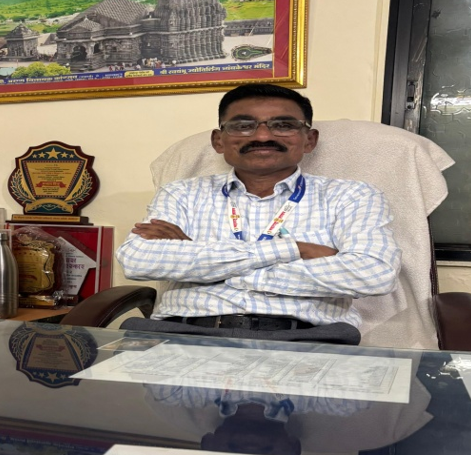
    PS Trimbakeshwar

    • रविकांत सानप
      Ravikant Ramchandra Sanap

      Block Development Officer

      Contact No- 9881264490

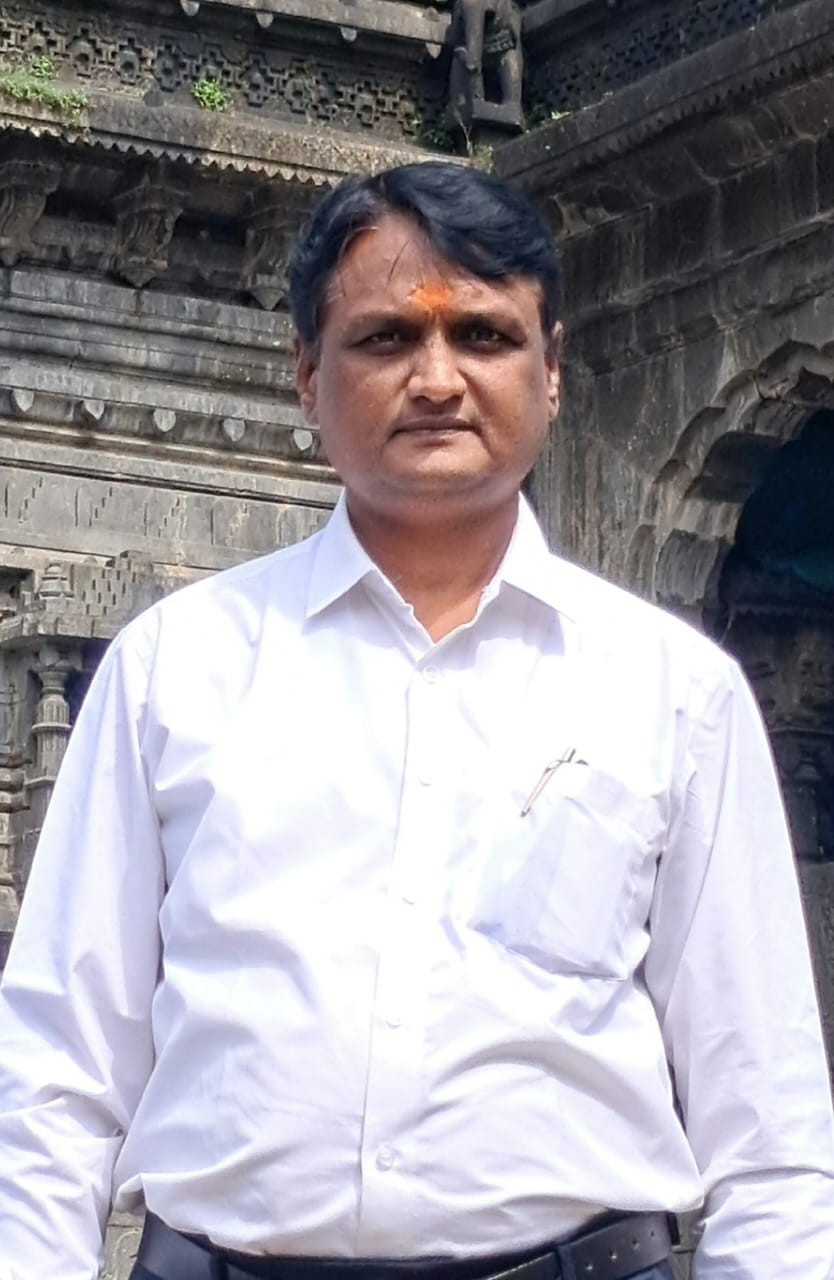
    • हेमंत bachhav
      Hemant Gokul Bachhav

      Asst. Block Development Officer

      Contact No- 9423697629

    Introduction to Trimbakeshwar Taluka

    1) Geographic Location and Area

    Trimbakeshwar Taluka is located in Nashik district, Maharashtra.
    The town of Trimbakeshwar is situated at the foothills of the Brahmagiri hills, about 28 km from Nashik city.
    It is located at an elevation of 3000 feet above sea level.
    The total area of Trimbakeshwar Taluka is 895.85 sq. km.

    The Trimbakeshwar Temple is the main attraction of the taluka. This temple is built of black stone and was renovated during the time of Bajirao Peshwa. The Shivling here is unique, as it appears in three different forms through a continuous stream of water. Every Monday, a palakhi (palanquin procession) of the deity takes place, where the idol of Lord Shiva is carried.


    2) Population (2011 Census)

    As per the 2011 Census, the population of Trimbakeshwar Taluka is as follows:

    Category Male Female Total
    SC 3593 3381 6974
    ST 65680 65084 130764
    Others 9855 8774 18629
    Total 79128 77239 156367

    3) Climate

    Trimbakeshwar experiences four seasons:

    • Summer: Mid-March to early June
      Temperature ranges from 37°C to 39°C.
    • Monsoon: Mid-June to mid-October
      Annual rainfall is approximately 1050 mm.
    • Winter: November to February
      The weather becomes cold.

    Overall, the climate is hot and irregular.


    4) Political Information

    • Trimbakeshwar Taluka is part of Nashik district.
    • It is under the Trimbakeshwar (ST reserved) Assembly Constituency.
    • This taluka falls under the Nashik Lok Sabha Constituency.
    • At village level, Gram Panchayats function, while the town is governed by Nagar Parishad (Municipal Council).
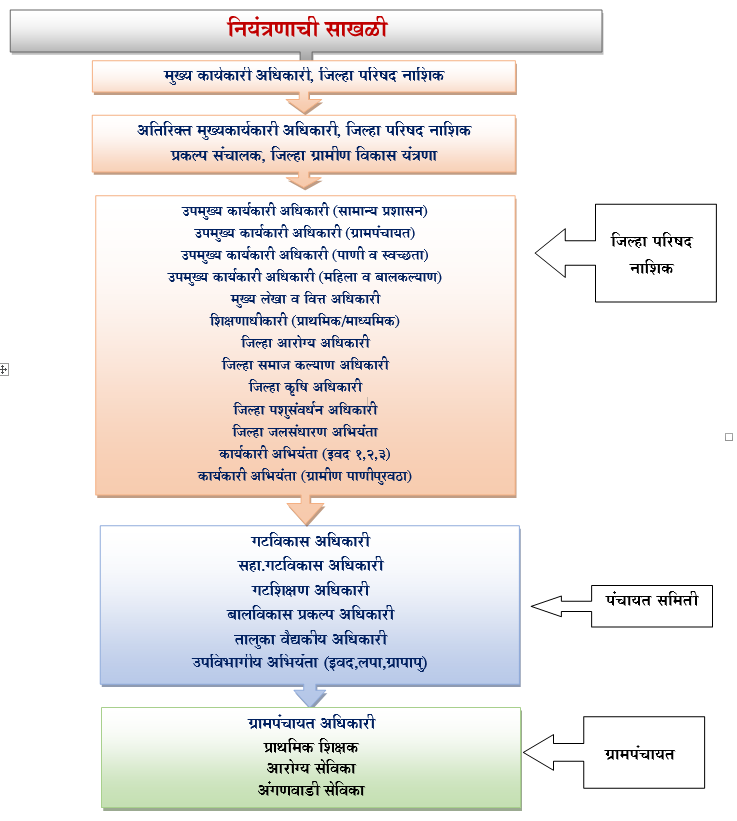
    • The administrative supervision is handled by the Block Development Officer (BDO) and the Zilla Parishad, Nashik.

    5) Local Importance and Background

    Trimbakeshwar is one of the 12 Jyotirlingas of Lord Shiva and is a major Hindu pilgrimage site.
    The Kumbh Mela (Sangam fair) is also held here. Every 12 years, the Ardha Kumbh Mela is celebrated in Nashik.
    Trimbakeshwar hosts major Shaiva and Vaishnava religious sects and is considered highly sacred.

    The Samadhi Temple of Nivruttinath Maharaj is located here.
    The Godavari River originates near Trimbakeshwar.


    Trimbakeshwar Taluka – Officials List

    Sr. No. Designation Name of Officer/Staff Phone / Fax / Email Address
    1 Block Development Officer (B.D.O.) Shri Ravikant Ramchandra Sanap nsktrambak@gmail.com Panchayat Samiti, Trimbakeshwar
    2 Assistant Block Development Officer Shri Hemant Gokul Bachhav nsktrambak@gmail.com Panchayat Samiti, Trimbakeshwar
    3 Child Development Project Officer – 1 (Trimbakeshwar) Smt. Mangala Shantaram Bhoye nsktrambak@gmail.com Panchayat Samiti, Trimbakeshwar
    4 Child Development Project Officer – 2 (Harsul) Smt. Mangala Shantaram Bhoye nsktrambak@gmail.com Panchayat Samiti, Trimbakeshwar
    5 Cluster Education Officer Shri Mothabhau Ramchandra Chavan nsktrambak@gmail.com Panchayat Samiti, Trimbakeshwar
    6 Assistant Engineer (LPA) Shri Deepak Vijay Mahajan nsktrambak@gmail.com Panchayat Samiti, Trimbakeshwar
    7 Assistant Engineer (Grampapoo) Shri Rohit Govind Rathod nsktrambak@gmail.com Panchayat Samiti, Trimbakeshwar
    8 Assistant Engineer (IWD) Shri Satish Sahebrao Darade nsktrambak@gmail.com Panchayat Samiti, Trimbakeshwar
    9 Animal Husbandry Development Officer (Extension) Dr. Yogesh Sampatrao Mehre nsktrambak@gmail.com Panchayat Samiti, Trimbakeshwar
    10 Taluka Medical Officer Dr. Motilal Bajirao Patil nsktrambak@gmail.com Panchayat Samiti, Trimbakeshwar
    11 Agriculture Officer Shri Mahesh Baburao Nagpurkar nsktrambak@gmail.com Panchayat Samiti, Trimbakeshwar


    Agriculture Department – Panchayat Samiti, Trimbakeshwar (Scheme Information)

    1. Dr. Babasaheb Ambedkar Agricultural Self-Reliance Scheme

    This scheme is implemented for Scheduled Caste beneficiaries.

    Main Benefits (Packages)

    • New Irrigation Well Package
    • Old Well Repair Package
    • Farm Pond Lining Package

    Eligibility Conditions

    • The farmer must have a Caste Certificate of SC issued by a competent authority.
    • The farmer must have a land holding of minimum 0.40 ha and maximum 6.0 ha.
    • For more information, contact the Agriculture Officer (Vighyo), Panchayat Samiti, Trimbakeshwar.

    2. Birsa Munda Agricultural Revolution Scheme (Within & Outside the Area)

    This scheme is also implemented for Scheduled Tribe beneficiaries.

    Main Benefits

    • New Irrigation Well Package
    • Old Well Repair Package
    • Farm Pond Lining Package

    Eligibility Conditions

    • The farmer must have a Caste Certificate of ST issued by a competent authority.
    • Land holding should be 0.40 ha to 6.0 ha.
    • For more information, contact the Agriculture Officer (Vighyo), Panchayat Samiti, Trimbakeshwar.

    3. District Council Subsidy Scheme

    Benefits

    • Farmers receive 50% or limited subsidy on agricultural tools and seeds.
    • Purchase is done via DBT (Direct Benefit Transfer).

    4. National Biogas Development and Fertilizer Management Program

    • Provides subsidy for biogas plants.

    5. Natural Disaster Relief Scheme

    • Limited subsidy for farmers affected by natural disasters under District Council SES Scheme.

    Pradhan Mantri / Shabari / Ramai / Modi / PM-JANMAN Housing Scheme

    Panchayat Samiti, Trimbakeshwar

    Scheme Name: Ramai Housing Scheme

    Sr. No. Topic Details
    1 Eligibility Conditions Beneficiaries approved by Gram Sabha, who do not have a permanent house and have not received benefits from any other scheme earlier.
    2 Eligibility Procedure – Beneficiary should be from Scheduled Caste. – Monthly family income must be less than ₹10,000. – No family member should have received benefits earlier. – Gram Panchayat should approve in Gram Sabha. – Must have own property or consent letter.
    3 Procedure for Benefit After Gram Panchayat proposal is received, the Assistant Commissioner (Social Welfare), Nashik checks the proposal. After administrative approval from Project Director, District Rural Development Agency, Nashik, the beneficiary receives ₹1,70,000 within 3–4 weeks through Panchayat Samiti.
    4 Benefit Details ₹1,70,000 for house construction + ₹28,440 for labor (90 days @ ₹316 per day).
    5 Subsidy Disbursement Stages 1st Installment – House sanctioned2nd Installment – Plinth level3rd Installment – Lintel level4th Installment – Completion
    6 Competent Officer Group Development Officer, Panchayat Samiti, Trimbakeshwar
    7 Application Fee Free of cost
    8 Grievance Redressal Group Development Officer, Panchayat Samiti, Trimbakeshwar
    9 Responsible Officer Group Development Officer, Panchayat Samiti, Trimbakeshwar

    Maharashtra State Rural Livelihood Mission (MSRLM)

    1. Group Capital Fund (Grant)

    Sr. No. Scheme Amount Conditions Procedure
    1 Group Capital Fund ₹15,000 (State) / ₹15,000 (Central) Group must be at least 3 months old ICRP evaluates the group and proposes to the Taluka office. After approval, funds are transferred directly to the group’s bank account.

    Required Documents

    • Group Passbook
    • Aadhar Card
    • Individual Passbook
    • E.R.F evaluation form

    2. Loan Assistance to Groups

    Sr. No. Amount Procedure
    2 Minimum ₹1 lakh to maximum ₹20 lakh Group applies for loan through ICRP and coordinator. Proposal is sent to Taluka office and then bank approval is obtained.

    Documents Required

    • Group bank passbook
    • Aadhar card
    • Individual passbook
    • Passport size photo
    • Group photo
    • Group account book

    3. Community Investment Fund (CIF)

    Amount Procedure
    ₹60,000 Group prepares Micro Investment Plan (MIP). Proposal is approved at Gram Sabha and then forwarded through Taluka office. Funds are transferred to group bank account.

    Animal Husbandry Department Schemes – Panchayat Samiti, Trimbakeshwar

    1. State Level Innovative Scheme (Dairy Animal Group)

    Provides groups of:

    • 2 dairy indigenous cows / 2 crossbred cows / 2 buffaloes

    Beneficiary Priority

    • Women Self Help Group members
    • Small landowners
    • Educated unemployed youth

    Subsidy

    • General category: 50% subsidy
    • SC/ST: 75% subsidy

    Group Cost

    • Cow: ₹70,000 each
    • Buffalo: ₹80,000 each
    • 2 cows / 2 buffalo group: ₹1,56,850
    • 2 buffalo group: ₹1,79,258

    2. Sheep/Goat Rearing Scheme

    Provides groups of:

    • 10 goats/sheep + 1 male goat

    Beneficiary Priority

    • Below poverty line
    • Small landowners
    • Educated unemployed
    • Women SHG members

    Subsidy

    • General category: 50%
    • SC/ST: 75%

    Group Cost

    • Osmanabadi / Sangamneri goat: ₹1,03,545
    • Local goat: ₹78,231
    • Madgyaal sheep: ₹1,28,850
    • Deccani / local sheep: ₹1,03,545

    3. Poultry Scheme (100 Broiler Birds)

    Project Cost: ₹2,25,000

    • Poultry house, store room, water tank, electricity etc.: ₹2,00,000
    • Equipment, feeders, brooders: ₹25,000

    Subsidy

    • General: 50%
    • SC/ST: 75%

    4. District Annual Plan – SC / ST Subscheme

    Provides:

    • 2 dairy cows / buffalo group
    • Subsidy: 75% for SC/ST

    5. District Annual Plan – Sheep/Goat Scheme

    Provides:

    • 10 goats/sheep + 1 male goat

    Subsidy

    • SC/ST: 75%

    6. Integrated Poultry Development Program

    A) 100 Day-Old Chicks

    • Subsidy: 50%
    • Group cost: ₹29,500

    B) 25+3 Birds

    • Subsidy: 50%
    • Group cost: ₹10,840

    Taluka Health Department – Panchayat Samiti, Trimbakeshwar (Schemes)

    1. Family Planning

    • Sterilization surgeries are done at Primary Health Centre level.
    • Compensation:
      • SC/ST and BPL women: ₹600
      • General category women: ₹250
      • Men: ₹1500

    2. Ayushman Bharat

    • A health card is provided to all.
    • Treatment in private hospitals up to ₹5,00,000 is covered.
    • Medicines and surgery are free.

    3. Maternity Incentive Scheme

    • Implemented in tribal areas.
    • Compensation ₹400 for pregnant women from SC/ST and BPL.

    4. Janani Suraksha Yojana

    • Institutional delivery: ₹700
    • Home delivery: ₹500

    Integrated Child Development Services (ICDS) – Trimbakeshwar 1/2

    Innovative Programs

    Sr. No. Innovative Concept Activities
    1 From Waste to Durable Making separate bags for children using empty THR bags
    2 Doll House Developing social feelings
    3 Child Corner Efforts for weight gain in underweight children
    4 Breastfeeding Training Showing IIT training videos for guidance
    5 Kitchen Garden Growing vegetables in garden for nutrition
    6 Welcoming Girl Child Celebrating birth of girl child
    7 Nutrition Training Nutrition training using THR
    8 Cooking Demonstration Demonstrating importance of various vegetables


    Introduction

    The implementation of the Right to Information Act, 2005 has brought better control over governmental and semi-governmental institutions. This Act ensures that the public gets transparent information about how government work is carried out, how various welfare schemes are implemented, and what are the different stages/processes at various levels.

    As the governance becomes more transparent, the public’s suspicion reduces. It also helps in preventing delay, negligence, and corruption automatically.


    This Right Includes the Following:

    • Inspection of work, documents, and records
    • Obtaining certified copies of documents or records and taking notes
    • Obtaining certified copies of materials
    • Receiving information in printed form (printouts), CD, floppy, tapes, video recordings, or any other electronic medium

    Index

    Sr. No. Title Description Download
    1 Information under Section 4 (1) (a) to (p) of the Right to Information Act, 2005 Information under Section 4 (1) (a) to (p) of the Right to Information Act, 2005 – Panchayat Samiti, Trimbakeshwar (View/Download)


    Trimbakeshwar (Trimbak) – Overview

    Trimbakeshwar is one of the twelve Jyotirlingas and is a famous Hindu pilgrimage site located near Nashik. It is the main town and administrative headquarters of Trimbakeshwar Taluka. The Sangam (Kumbh) Mela – “Sangam Sth Kumbh Mela” is held here. Under the leadership of three Akharas (religious orders), the half Kumbh Mela is organized in Nashik every twelve years. Shaiva Akharas also gather at Trimbakeshwar. Among Vaishnavas, the Digambar Ani, Nirvani Ani, and Nirmohi Ani Akharas are considered supreme.

    Trimbakeshwar is also famous for the Samadhi Temple of Nivruttinath Maharaj. The origin of the Godavari River is also located here.


    Shri Trimbakeshwar Temple (History)

    In the 10th century, Shilahara king Jhanj built a total of twelve Shiva temples at the origin points of twelve rivers between Godavari and Bhima. One of these temples is Trimbakeshwar.

    The twelve temples are:

    1. Trimbakeshwar – at the origin of the Godavari River
    2. Shiva Temple at Tringalwadi – near the origin of the Vaki River
    3. Temple at Tarhele – near the origin of the Dharana River
    4. Temple at Belgaon – near the origin of the Bam River
    5. Temple at Taked – near the origin of the Kadva River
    6. Amruteshwar at Ratanwadi – near the origin of the Pravara River
    7. Harishchandreshwar – at the origin of the Mula River
    8. Nageshwar at Khire – near Pushpavati
    9. Kukdeshwar at Kukdi – near the origin of Kukdi River
    10. Brahmanath at Parunde – near the origin of Meena River
    11. Siddheshwar at Vachpe – at the origin of Ghoda River
    12. Bhavargiri – near the Bhima River

    All these temples are known for their sculptural beauty and exquisite carvings, including the Trimbakeshwar Temple.


    Temple Reconstruction and Heritage Status

    During 1755–1786, Nana Saheb Peshwa rebuilt the Trimbakeshwar Temple in the Nagar architectural style.
    The Government of India declared this temple as a National Protected Monument on 30 April 1941. It is one of the twelve Jyotirlinga temples.

    The temple is surrounded by stone walls and has five golden kalashas (spires) and a flag made of panchdhatu (five metals). The kalash and flag were donated by Annasahib Vinchurkar. The Kushavart Tirtha near the temple was renovated by the Parnerkar family, who were the Holkar’s Padhnis.


    Pilgrimage & Devotional Significance

    Trimbakeshwar is situated in the scenic area of Brahmagiri hills, making it a major pilgrimage site with devotees visiting throughout the year. The crowd increases significantly during Shravan month. On Shravan Mondays, lakhs of devotees visit Trimbakeshwar. The first three Mondays of Shravan are especially crowded.

    The temple has a main gate on the east side and a small gate on the south side. The main road of the village is connected to the east gate.

    Devotees come from all over India to take a holy bath at Kushavart Tirtha. Brahmagiri is considered the second-highest place in Maharashtra. The Nivruttinath Yatra is also conducted here.

    The village has many ancient temples with beautiful carvings. The village offers good accommodation facilities and has frequent bus services from Nashik.


    Geography & Economy

    This region receives heavy rainfall. The main crops grown here are rice and ragi (nachni). Trimbakeshwar is also a market center for tribal communities, and many tribal organizations work here for tribal rights. The lands given to monasteries are often cultivated by tribal people.


    Brahmagiri – Brahmagiri Parikrama (Circuit)

    Trimbakeshwar is one of the twelve Jyotirlingas, where devotees worship Lord Shiva, take a holy bath at Kushavart, and perform unique rituals. Some devotees also climb Brahmagiri hill to view Lord Shiva’s Jata (matted hair) and return.

    Brahmagiri hill holds mythological, historical, and geographical importance. The trek includes the Brahmagiri Jodkilla (Fort) and the Metghar Fort along the way.


    Brahmagiri Details

    Behind the Trimbakeshwar Temple, a long mountain range is visible—this is Brahmagiri. The right part of this range appears slightly separated by a natural ridge. This is the Brahmagiri Jodkilla (Fort).

    After visiting the temple and Kushavart, one can start the Brahmagiri path, which is a well-built stone stairway. In 1908, two philanthropists built these steps at a cost of ₹40,000. The path is well maintained even today.

    Ancient carved stone steps lead to the entrance of Brahmagiri. On the hilltop, ruins of a fortified structure are visible, believed to be the residence of Moropant Pingale. Nearby, there is a small water tank. Further ahead is Darukothar.

    Devotees also visit the place where Lord Shiva is believed to have sat and the Ganga originated. The marks of Shiva’s Jata and head are still visible on the rock.

    A path then leads to Durgh Bhandar Fort, which is often not visited by pilgrims. The path is steep but reachable. The fort appears separated from the main Brahmagiri by a natural ridge. Steps carved in the rock lead to the fort. The fort provides panoramic views of the entire Brahmagiri.

    From the fort’s top, one can see the entire Brahmagiri range. The route includes the Hatti Darwaja (Elephant Gate) and a watchtower called Vinay Buruj (information not fully confirmed).

    After descending, one reaches the Metghar Fort ruins. The Brahmagiri has five peaks, also called Panchlingi, named: Sadyajata, Vamdev, Aghor, Ishan, and Tatpurush.

    Crossing the Hatti Darwaja, the route descends through a gorge and finally returns to Trimbakeshwar, completing the Brahmagiri Parikrama.

     

    Contact Information – Trimbakeshwar Panchayat Samiti

    Email ID: nsktrambak@gmail.com

    Group Development Officer (BDO) Contact Number: 9881264490

    Assistant Group Development Officer Contact Number: 9423697629

    Panchayat Samiti Contact Number: (02594-233812)